


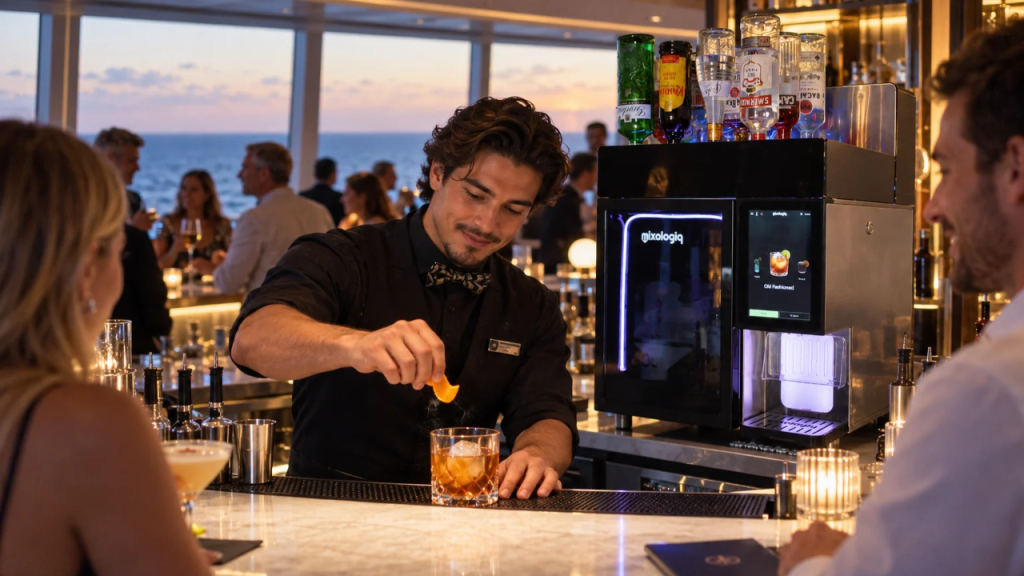
Cruise ship bars can protect cocktail quality at peak times by keeping track of incoming orders, using accurate measures and ensuring that bartenders remain in control of each drink.
When demand rises, automating the dispensing of configured liquid ingredients can reduce one repetitive manual task. This may give the team more room to finish cocktails properly and look after guests, without skipping essential preparation steps.

When everyone wants a cocktail at once
Before dinner, orders start to build. Later, evening entertainment and activities can bring another wave of requests.
One table orders several cocktails. Another group arrives at the bar. While the bartender finishes a drink, more orders are already waiting.
At these moments, pressure reaches the whole operation. Staff must measure ingredients, switch between recipes, carry out manual preparation steps and serve guests while new requests continue to arrive.
When volumes exceed the usual pace, orders can become harder to follow, the preparation sequence can become less orderly, and hurried manual measuring may be less precise.
A peak period can change the experience a guest expected to enjoy.
The impact goes well beyond an inaccurate measure
Cocktail quality depends on the right proportions, but also on careful preparation and presentation.
Under pressure, a bartender may have less room to check a recipe, finish a garnish or notice a table still waiting for its order.
That is why maintaining cocktail quality at peak times is a challenge for both the drink and the service. Even when bar staffing is planned carefully, a bartender still faces several tasks within a compressed service window.
The aim should not be speed alone. It should be to reduce the repetitive work competing for the team’s attention.
Mixologiq: Precision for every shift
This is where Mixologiq can directly support professional bar teams.
Mixo automates the precise measuring and dispensing of liquid ingredients configured for the machine, supporting an essential stage of cocktail preparation.
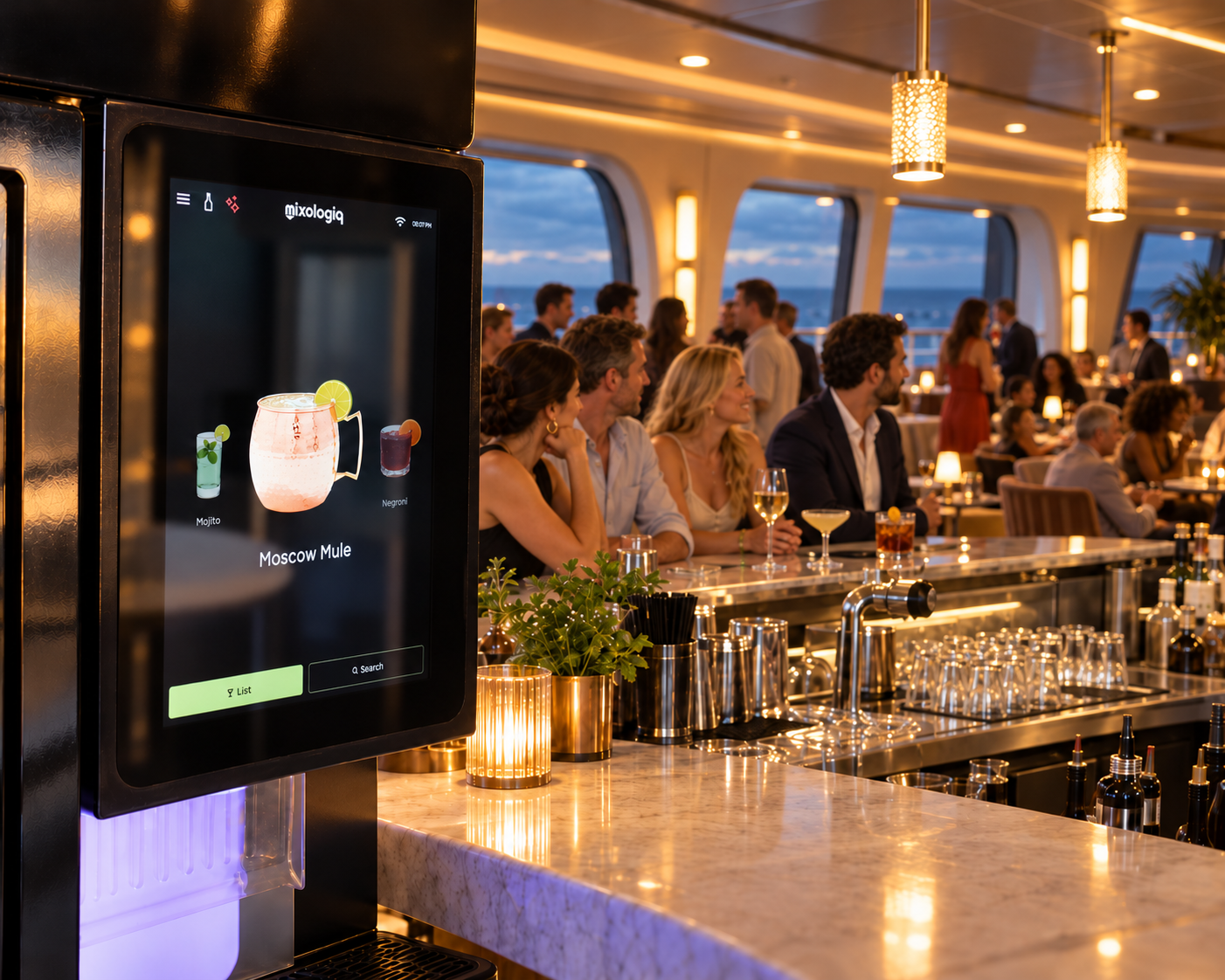
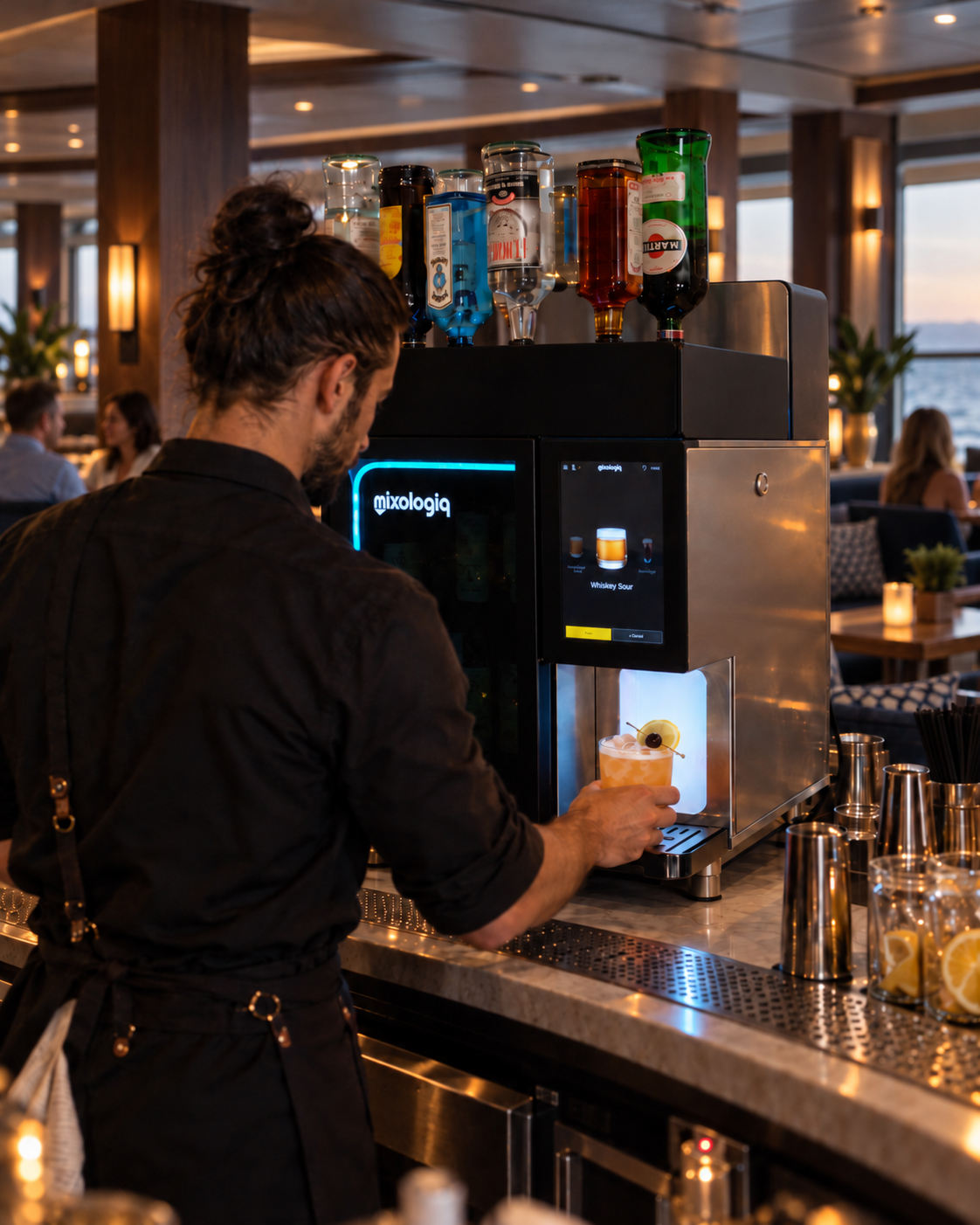
The bartender selects the cocktail on the touchscreen. Mixo dispenses the configured measures, and the professional completes the required steps: shaking when the recipe calls for it, adding any manual ingredients, garnishing and serving.
This sequence allows measures for the machine-managed liquids to follow a defined configuration rather than relying on a succession of manual pours under pressure.
In high volume bartending, that assistance can make one part of the process easier without removing the bartender’s judgement.
Accurate dispensing helps the liquid proportions follow the recipe. Those proportions are part of the drink the guest expects to receive.
From dispensing to the guest: a more fluid service chain
When bartenders spend less hands-on time measuring configured liquids, they may have more room for the next stages of service: finishing a drink, checking its presentation, talking to a guest or noticing which tables still need attention.
Mixo does not manage orders or decide their sequence. Those responsibilities remain with the team. Its role is to simplify a repetitive part of preparation so people can give more attention to the rest.
Preparation also matters. A bar opening checklist for Mixo should include verifying that loaded ingredients match the machine’s bottle configuration and that the planned recipes are available.
Daily cleaning at the end of service is required. Mixo is indoor use only; any proposed maritime application requires specific technical assessment.
Precision in the service of hospitality
A peak period does not have to become impersonal. Automated dispensing can support recipe execution while bartenders continue to handle the details that require human attention.
It does not guarantee waiting times or replace effective service management. It can, however, reduce reliance on manual measuring during demanding periods.