


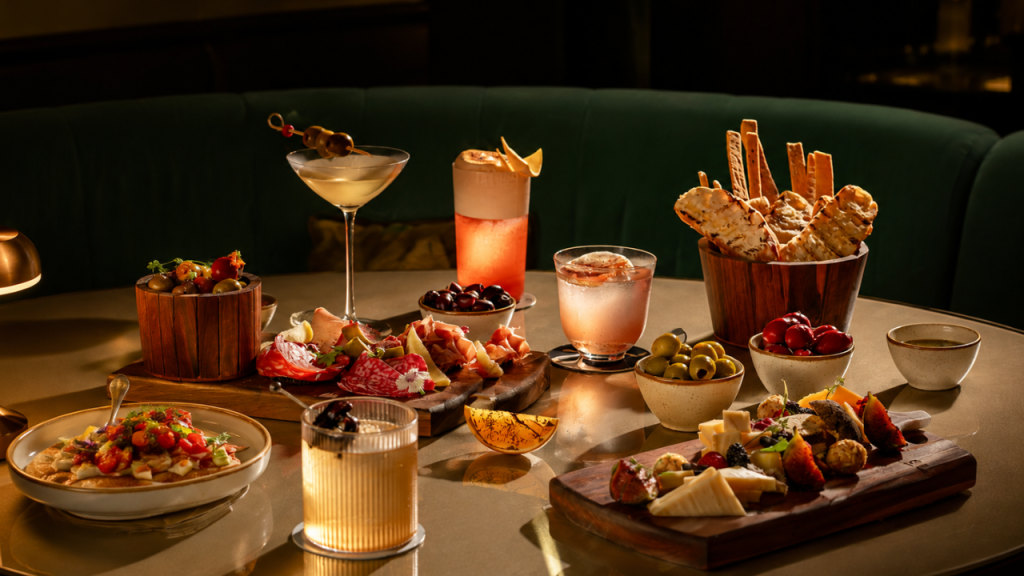
Vintage 70s cocktail snacks are returning to modern hospitality, not as a nostalgic gesture, but as a considered way to make cocktail service feel more complete.
For decades, bars, hotels and social venues paired cocktails with small appetizers selected to balance flavours, soften intensity or extend the experience. Today, vintage 70s cocktail snacks offer venues a useful hospitality idea that can be reinterpreted with modern presentation, precision and operational control.
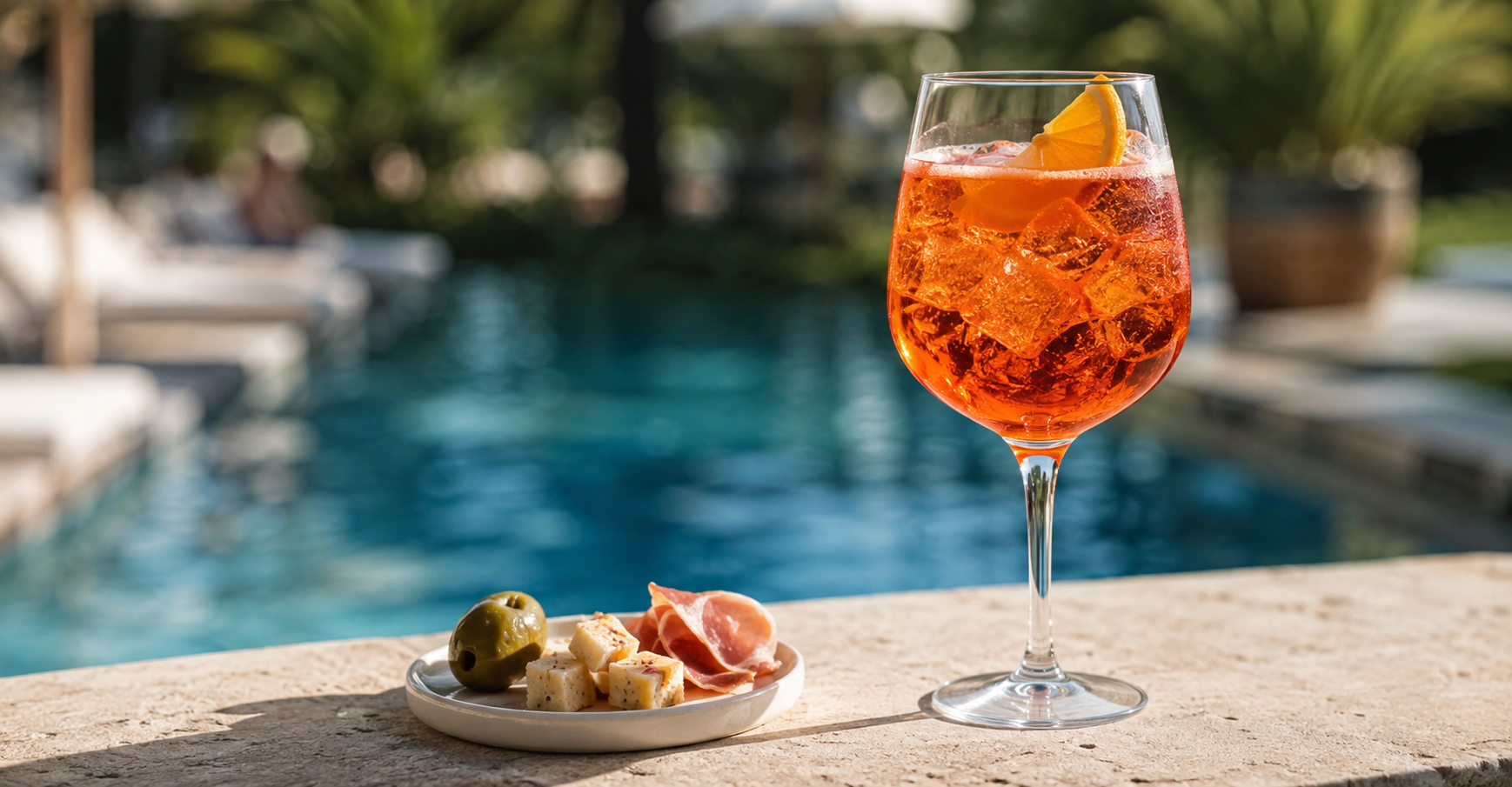
Vintage 70s cocktail snacks offer modern venues a way to differentiate through the complete moment created around the drink, not through the cocktail menu alone.
A carefully selected appetizer can complement the flavour profile of the cocktail, reinforce presentation and give the guest another reason to stay, share and remember the visit.
The objective is not to recreate a 1970s buffet. It is to reinterpret a hospitality practice: treating the cocktail and the bite as one composition. Precision protects the quality of the drink. The appetizer adds an additional layer of value to the experience.
The most effective pairing does not begin with the appetizer. It begins with the flavour logic of the cocktail.
Start with the cocktail
Understand the drink first, then select a bite that contrasts, balances or extends its flavour profile.
Build one visual composition
Glassware, colour, portion size and plating should feel coherent without becoming excessive.
Keep the pairing controlled
The bite should support the drink, not dominate it. Premium service often depends on what is left out.
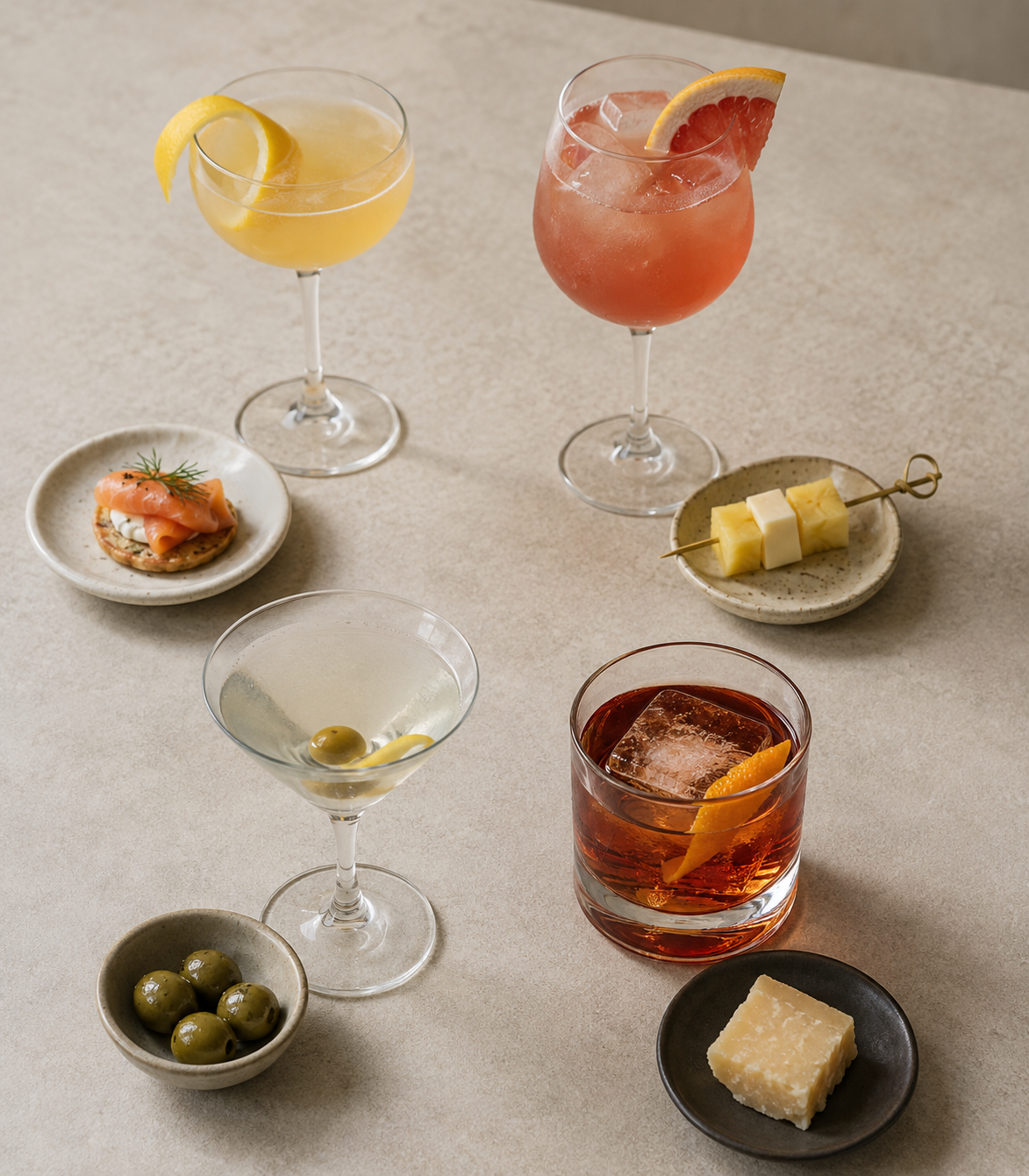
Bright cocktails often benefit from richer or salt-led bites
Lemon, lime, grapefruit and herbal notes can pair well with salty, creamy or lightly rich appetizers that balance acidity and give more dimension to the serve.
Useful for fresh profiles with clean presentation and a lighter visual language.
Fruity cocktails usually need contrast to keep definition
When both the cocktail and the appetizer lean too sweet, the pairing can lose shape. Salty, acidic or lightly spicy details help maintain balance.
A recognisable retro reference can be updated with more control and cleaner execution.
Dry cocktails need savoury support without unnecessary weight
Cocktails such as a Martini can work well with salty, creamy or umami-led elements, provided that the portion remains restrained and the seasoning stays controlled.
Minimal presentation helps the pairing remain sharp, elegant and intentional.
Intense cocktails require bites that can carry similar depth
Whisky, dark rum, coffee and spice-based cocktails call for accompaniments with enough character to match their intensity without competing with the drink.
Depth works best when the pairing remains compact, consistent and service-friendly.
Why Vintage 70s Cocktail Snacks Are Returning
A well-executed cocktail remains essential, but it is not always enough to distinguish a venue. Guests can now find visually appealing drinks in bars, restaurants and hotels with increasing ease.
As a result, perceived value depends more clearly on the complete moment created around the drink. When the cocktail arrives with a considered appetizer, the serve feels more deliberate and the venue gains another point of distinction.
This is not about excess. It is about extending the logic of hospitality. The drink is prepared with precision. The accompanying bite shows that the venue has thought beyond the glass.
Vintage 70s cocktail snacks can also bring a visual detail that guests want to photograph and share. That visibility matters, but only when it remains consistent with the venue’s premium character. The objective is not novelty for its own sake. It is coherence, quality and memorability.
Start with balance. The appetizer should contrast or support the drink, not mirror it without control.
Control the portion. A small bite is easier to serve consistently and less likely to interfere with the cocktail.
Protect the visual rhythm. Colour, plating and glassware should feel related, while still leaving the cocktail as the main point of focus.
The most effective pairings are built around flavour families rather than isolated ideas. This gives the venue a more repeatable way to structure the menu and align the team around the same logic.
Fresh citrus cocktails may call for salty or creamy bites. Fruity serves often need a sharper contrast. Dry cocktails can benefit from savoury restraint, while intense drinks need accompaniments with enough depth to match.
Once this logic is defined, the venue is in a stronger position to turn a creative idea into a reliable service format.
The pairing should feel memorable to the guest and manageable to the operation at the same time.
Organising the Menu by Flavour Family
Create flavour families
Group cocktails into categories such as citrus, fruity, dry, intense or creamy to make pairing logic easier to manage.
Assign compatible bites
Build a considered appetizer direction for each family so the concept remains consistent across service points.
Support repeatable service
Give the team a clearer service framework that helps maintain quality, speed and consistency during live operations.
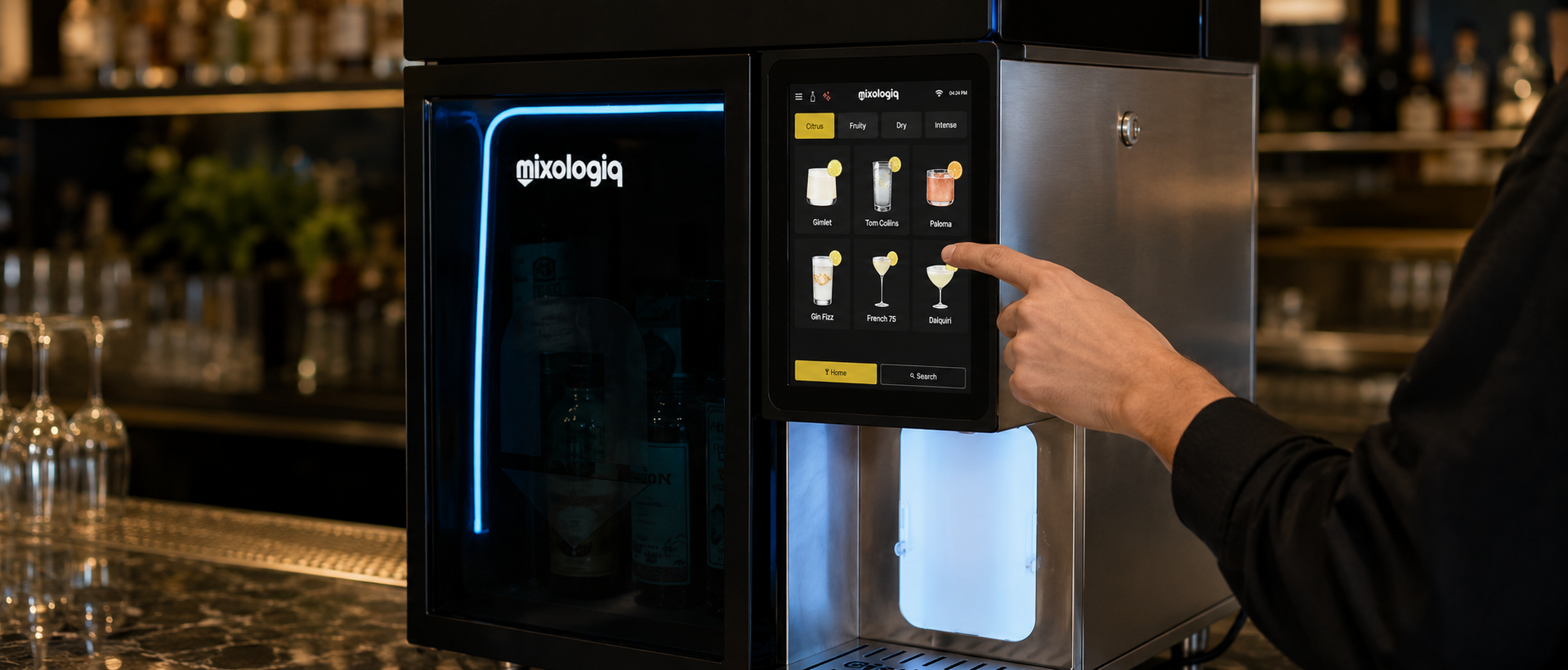
The value is not only in storing cocktails. It is in structuring menu logic in a way that helps the team serve with more clarity.
A pairing strategy becomes more useful when it can move from concept to service without losing consistency along the way.
Bringing Retro Hosting into a Modern Venue
Bringing vintage 70s cocktail snacks into a modern venue does not mean turning the space into a themed environment. The opportunity lies in recovering a strong hospitality practice and presenting it with modern control.
Begin with the flavour relationship, not the visual idea alone.
The cocktail profile should define the direction of the bite. When the flavour logic is clear, the pairing becomes easier to justify, easier to present and easier for the team to explain.
Keep the composition premium, controlled and easy to understand.
The most effective presentation is often the most disciplined one. Small portions, limited elements, clean glassware and clear plating help the pairing feel refined rather than decorative.
Build a format the venue can deliver consistently across service.
A pairing idea only becomes valuable when it can be reproduced at the right quality and rhythm. The operational side matters as much as the creative one.
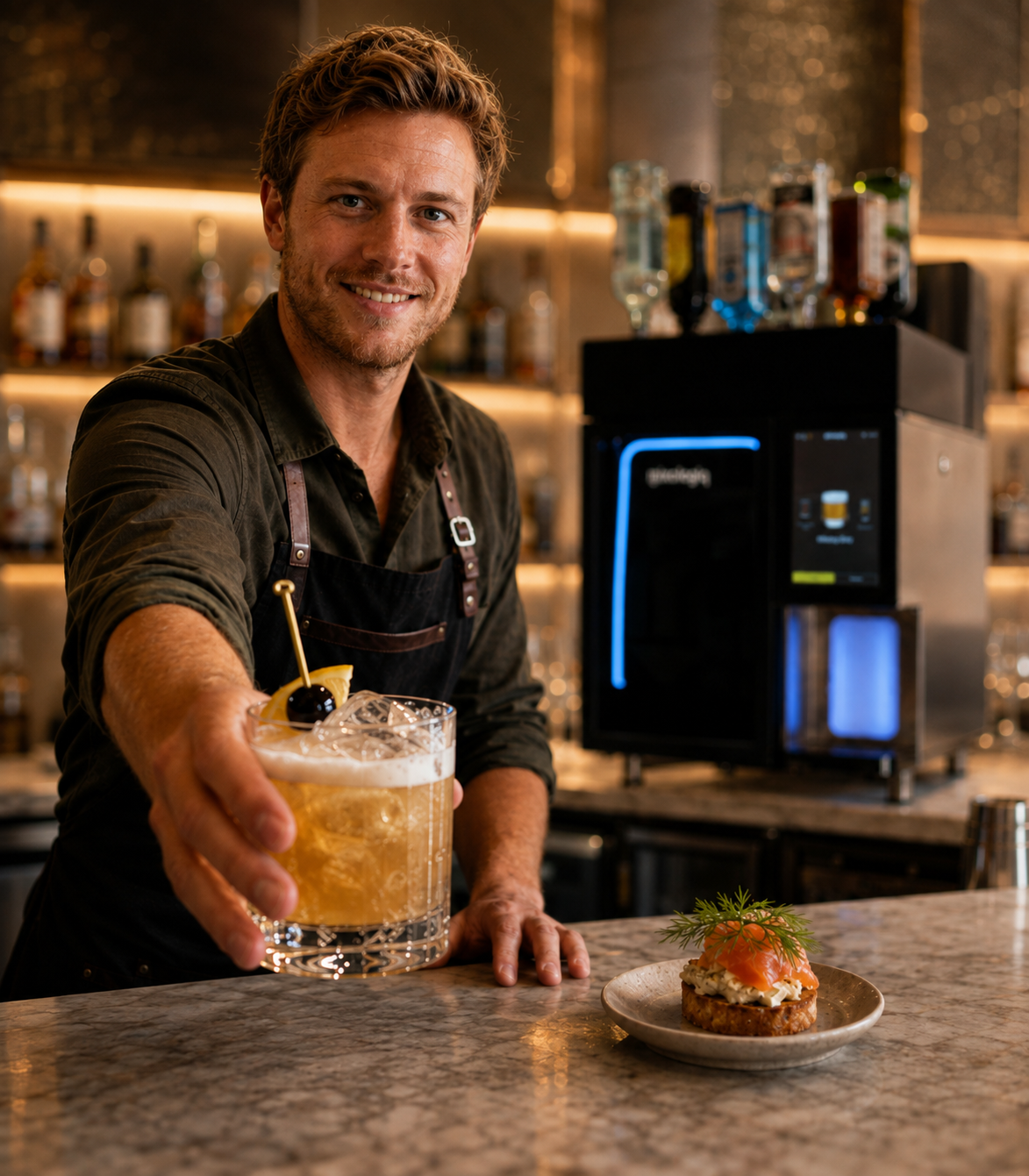
Guests should receive more than a correctly prepared drink. They should receive a moment that feels considered, complete and worth remembering.
In that context, the appetizer becomes more than an accessory. It can reinforce the perceived quality of the serve, extend the time spent at the table and add another detail guests want to photograph or discuss.
The role of the team remains central. Technology can organise the menu and support consistency, but hospitality professionals continue to interpret the guest, guide the recommendation and deliver the experience.
Technology can structure the menu. People give the pairing meaning at the table.
Precision, Excellence and an Additional Detail
Bringing vintage 70s cocktail snacks into a modern venue is not about turning the space into a nostalgic set. It is about recovering a hospitality habit that gave more value to each drink.
In a market where offering a cocktail is increasingly standard, differentiation appears when service combines precision, consistency and a carefully selected accompaniment.
The strongest pairings are not the most theatrical. They are the ones that understand flavour, respect presentation and remain practical enough to be delivered well.
The cocktail delivers the serve. The pairing helps define the experience.
Bring more structure to cocktail service.
Explore professional cocktail automation designed to support teams, organise service more clearly and help venues deliver consistency behind the bar.