


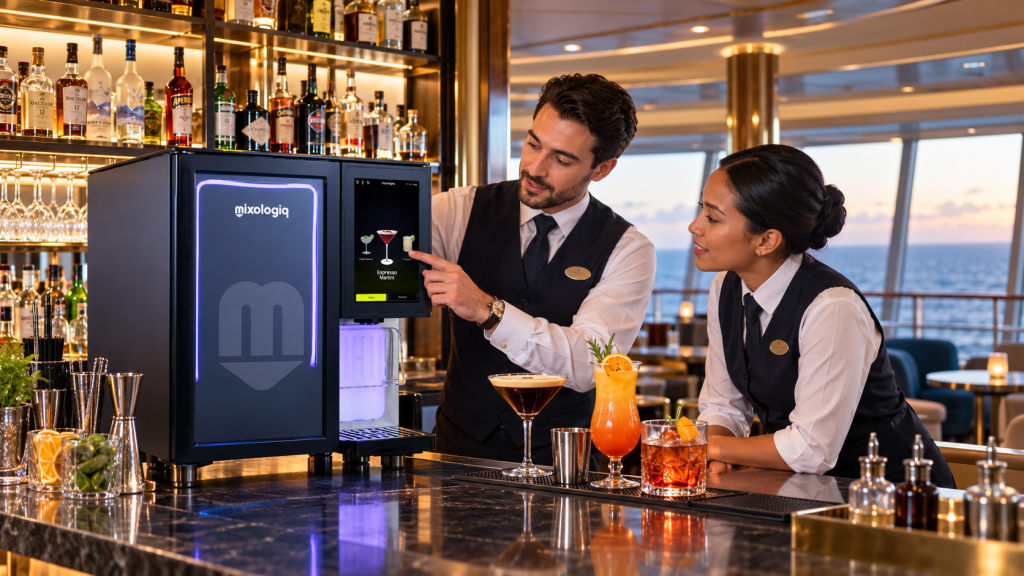
Running a cruise bar takes more than knowing cocktail recipes. Crew members need shared measures, clear manual steps and a common standard of guest service, even when assignments change. For an onboard supervisor, that raises a practical question: How do you train rotating bar crew quickly? Start with the requirements of the assigned bar—its menu, ingredients, measures and complete service workflow. Alongside required shipboard induction, focused bar staff training can use current station references, supervised demonstrations and observation of an entire serve. The aim is to develop relevant skills without expecting every recipe to be memorised or bypassing mandatory safety and hygiene training.
Why cruise bar teams need to train new arrivals repeatedly
Crew changes are part of cruise operations. Seafarers work on contracts of defined duration, and new colleagues take over when those contracts end. Crew may also be assigned to different bar outlets while on board. These changes do not necessarily mean that everyone is inexperienced; they mean that even an experienced bartender may face an unfamiliar menu, new recipes and different service routines.
A cocktail bar, lounge and speciality venue may share some drinks without sharing every ingredient, method or presentation. Each new assignment brings its own learning requirements.
The impact reaches beyond the newcomer. Supervisors and experienced bartenders must explain recipes, demonstrate steps and guide their new colleagues while continuing their own service responsibilities. Onboarding takes learning time from the new arrival and coaching time from the existing team.
What does a new bartender actually need to learn?
Effective hospitality staff onboarding starts with the current menu, the bar layout, the person’s responsibilities and the expected standard of guest service. It then focuses on the bar staff skills used at that station: knowing ingredients and measures, understanding which drinks need manual steps, selecting the appropriate glassware, and finishing and presenting each cocktail.
A current bar training manual or other point-of-service reference keeps approved recipe specifications and manual steps accessible without requiring every preparation to be memorised. The supervisor can demonstrate a complete serve, guide an initial attempt and use a practical competency assessment to observe the bartender before assigning independent duties.
An operator-maintained training matrix can record the crew member’s outlet assignment, tasks demonstrated, the instruction version used and supervisor sign-off. That record helps identify where a refresher is needed after reassignment. The aim is clear instructions, relevant practice and readiness demonstrated through observation.
The operational cost of learning every preparation from scratch
While someone is still learning a menu, they may need to check a measure, confirm a step or ask a colleague for help. Each interruption draws a more experienced team member away from their own work. Rechecking a recipe or correcting a pour can extend the preparation process and, in turn, the guest’s wait.
Measured manually, early attempts may also vary as a person becomes familiar with the outlet’s specifications. This is a normal challenge of learning a new routine, not a judgement on the individual.
For onboard F&B managers, every handover brings the same operational question: How do you train rotating bar crew quickly? One useful distinction is between the service steps that require supervised judgement and the liquid measures that can be handled by a configured dispenser. That gives supervisors a clearer training focus without removing human responsibility for finishing and serving.
Mixologiq: configured precision, easier onboarding
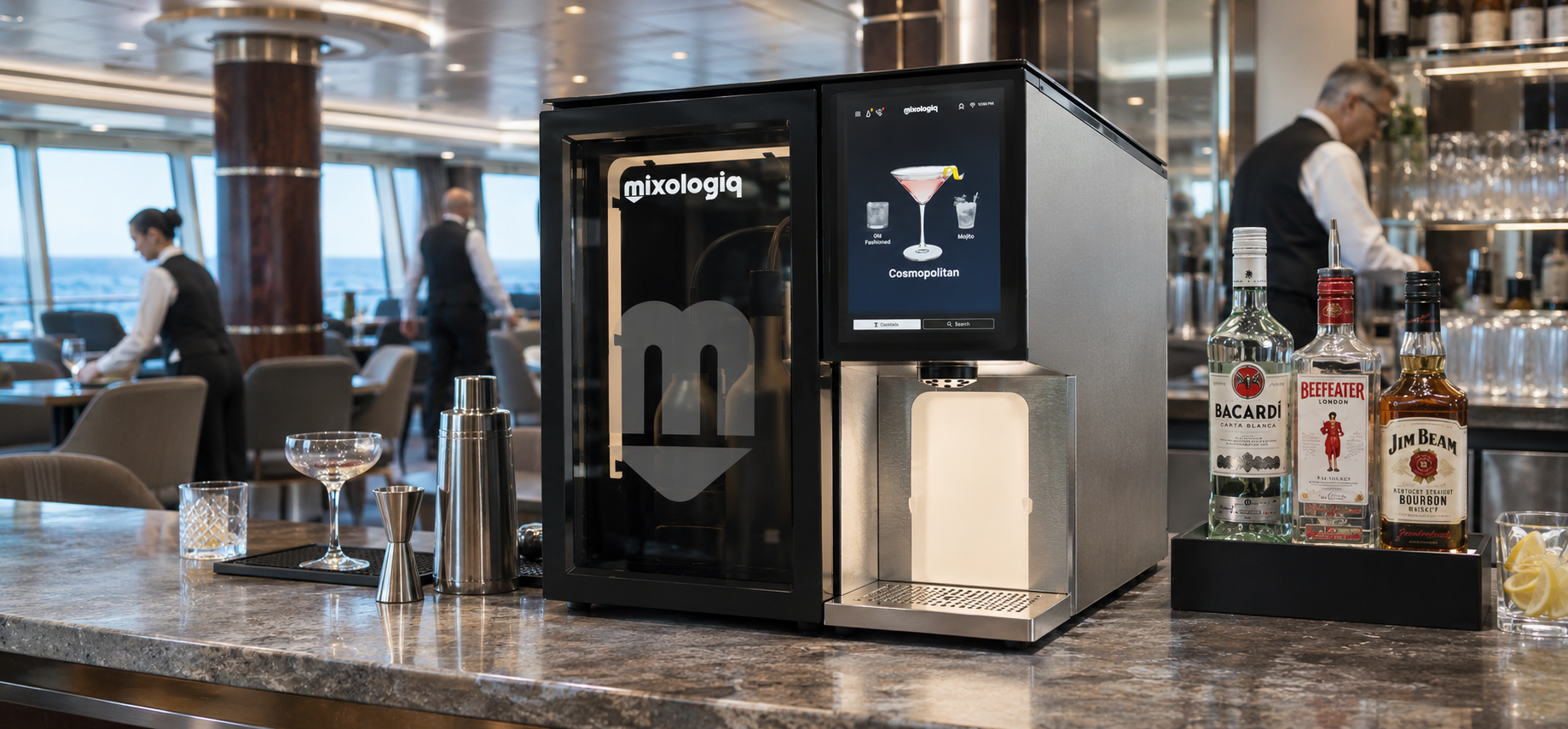
This is where Mixologiq offers a practical advantage. Rather than requiring every new bartender to memorise each machine-managed liquid measure, Mixo works with recipes configured in the system.
The bartender selects a cocktail on the touchscreen.
Mixo precisely dispenses the configured machine-managed liquid ingredients.
The bartender then shakes only if the recipe calls for it, adds any manual ingredients, garnishes and serves.
Machine-managed measures no longer have to depend on each new colleague’s memory. Training can focus on operating the equipment correctly, understanding the recipes and practising the human skills that complete service: correct finishing, presentation and attention to guests.
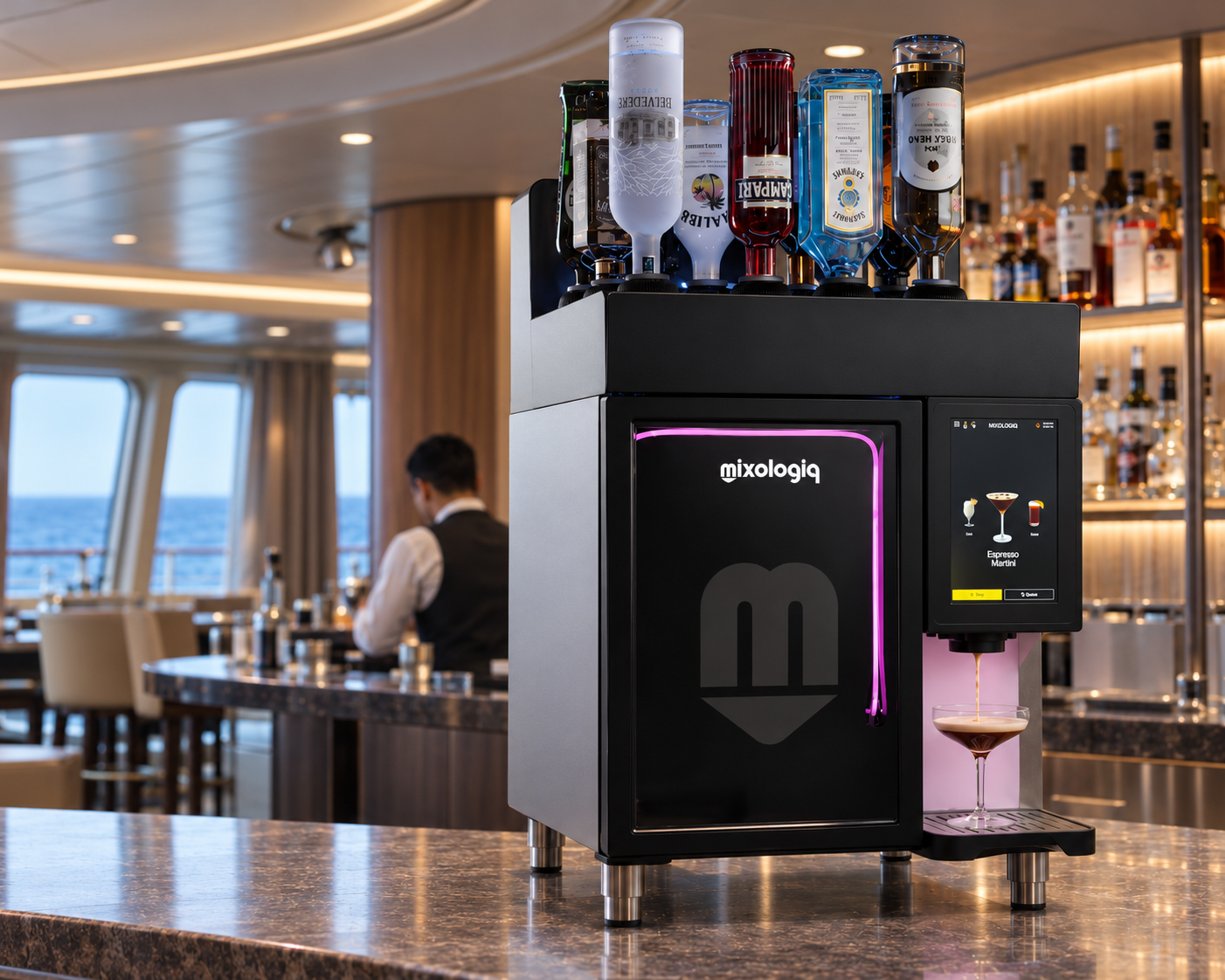
For a supervisor, this makes bar staff training more specific: machine-managed liquid measures are defined by recipe configuration rather than a sequence of remembered manual pours. The team still needs instruction in correct equipment use and daily closing cleaning. Mixo is indoor use only.
Where contracts, assignments and teams change, accessible configured measures can make an important part of onboarding easier to teach. The technology brings precision to dispensing; people bring the skills and hospitality that complete each drink.
Explore Mixologiq’s approach to cruise bars and beverage operations.