



Summer cocktails belong to one of the most active seasons in hospitality.
More visits, more reservations, more terraces, more events, more hotel stays, more daytime drinking occasions and longer hours of light. It also brings a guest who is more open to discovery.
Summer does not invite people to order the same thing every time.
It invites them to explore. To choose by feeling. To look for something fresher, sharper, more tropical, lighter, more visual or simply better suited to the moment.

That is where cocktails can give a venue more visibility. They can also expose a poor decision.
Choosing the right cocktail can help a menu move, encourage a table to order another round or make a guest remember the experience. Choosing the wrong one can mean investing time, training, ingredients and preparation into a drink that simply does not connect.
That is why summer cocktails are easy to love, but hard to predict.
Understand the summer guest, not the guest from the rest of the year
The analysis should not begin with the recipe. It should begin with how the guest makes decisions during this season.
In summer, many guests do not choose a cocktail by name alone. They choose by feeling.
Something fresh. Something acidic. Something fruity. Something tropical. Something light. Something different. Something alcohol free that still feels intentional.
A guest may not say, “I want something light and refreshing,” but they may ask for a drink that does not feel heavy. They may not mention a sour profile, but they may be looking for acidity, energy and freshness.
Cocktail names matter. But taste profiles help reveal the need behind the order.
Why summer cocktails need clear taste profiles
There are different taste profiles, and each one plays a different role in the guest experience.
Sour
The sour profile speaks to guests looking for acidity, energy and a drink with clear structure.
Light and refreshing
This profile answers a different need: ease. Something that can accompany a long conversation, a sunny afternoon, a lighter meal, a hotel stay or a second round without feeling heavy.
Fruity
Fruity profiles connect with guests looking for something accessible, expressive and visual.
Tropical
Tropical profiles answer a more emotional demand. They speak to holidays, poolside settings, resorts, leisure and escape.
Herbal
Herbal profiles serve another purpose. Not every guest wants something sweet, fruity or tropical. Some want freshness with more sophistication: something aromatic, dry or more adult.
Spicy
Spicy profiles act as differentiators. They attract guests who want more character, something that does not feel like the safest option.
Mocktails
Mocktails deserve serious attention during summer. There are more drinking occasions, more family moments, more brunches, more daytime events and more guests who do not want alcohol, but still want to participate in the experience.
The same profile does not perform equally in every venue
This evaluation does not produce the same result everywhere.
An urban rooftop may see stronger demand for fresh, citrus led and visual cocktails. A resort may lean more toward tropical, fruity and mocktail profiles. A restaurant with outdoor service may see a better response to sour, herbal or aperitif style drinks. A hotel may see different demands during the day and at night.
Context changes demand
One result does not fit every outlet
This is where many venues fail: they assume one result can be replicated everywhere.
A menu that works in a pool bar will not necessarily work in a lobby bar. A cocktail that moves well on a rooftop will not necessarily behave the same way in a restaurant.
That is why a summer menu cannot be defined by general intuition alone. It has to be analysed by venue, by profile, by cocktail and by moment.
Automation gives the venue the progress it needs
The cocktail world offers a vast number of possible recipes: classics, variations, signatures, mocktails, long drinks, sours, tropical drinks, herbal serves, spicy cocktails, bitter profiles, creamy profiles or balanced drinks.
Even an expert bartender does not always have fifty, sixty or one hundred recipes memorised, ready to offer, execute and adapt during real service.
And even if they did, the challenge would not only be knowing how to prepare them.
The challenge would be knowing which ones make sense for each venue, which profiles connect best with its audience and which cocktails deserve a real place on the menu.
This is where automation can give the venue the progress it needs.
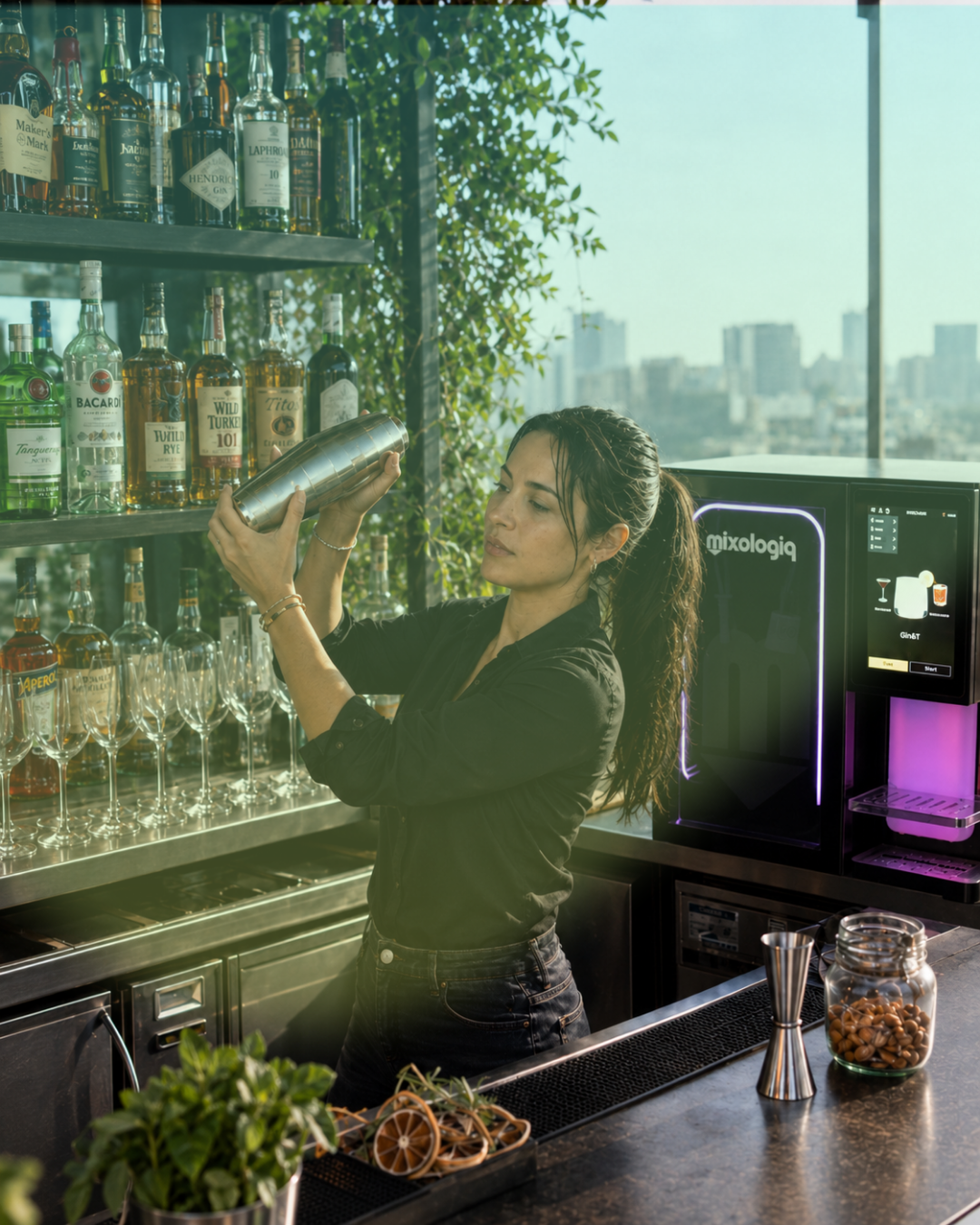
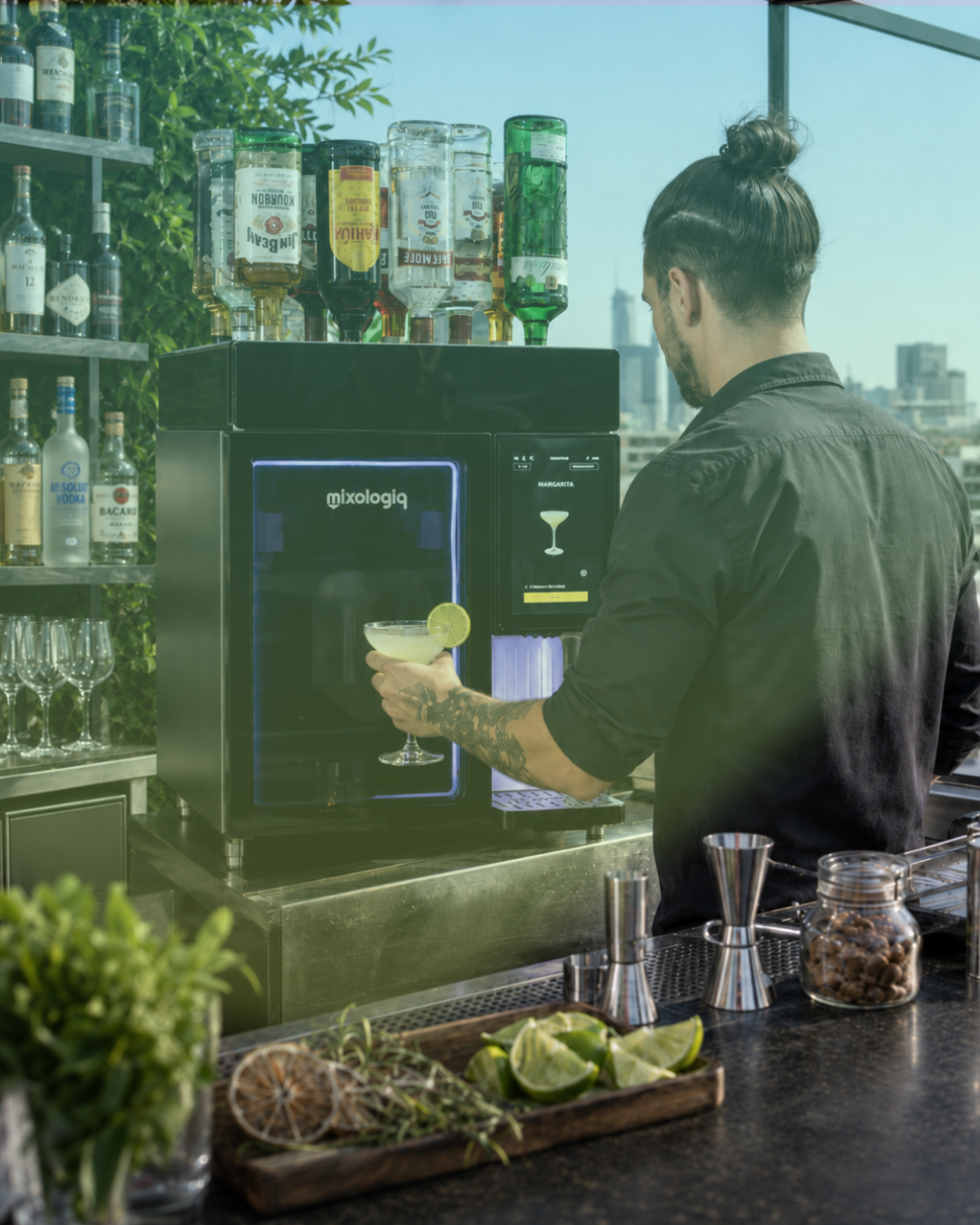
Mixologiq, part of the Asytec Group, works with Mixo 8, with 33 preloaded recipes, and Mixo 20, with 119 preloaded recipes. Both are professional machines designed to support cocktail service in hospitality environments.
Each recipe can be read not only by name, but also by taste profile, helping operators organise the menu with greater clarity.
For the team, this reduces dependence on individual memory.
For the venue, it helps structure the offer with more intention.
But serving more options does not mean understanding better what works.
Mixo 8
Mixo 8 includes 33 preloaded recipes. It is designed for focused cocktail service, giving teams a structured recipe base while supporting consistency during real hospitality operations.
Mixo 20
Mixo 20 includes 119 preloaded recipes. It gives venues a wider recipe selection with greater flexibility, helping operators organise cocktail options by name, profile and service relevance.
Where the analysis begins
Reading results is not always immediate for venues.
Many teams know which cocktails “seem to move”, but they do not always have a clear view of which profiles perform better, at what time of day, at which service point or in which location.
That is why many operations end up making decisions by intuition.
Some venues avoid changes because modifying the menu feels too complex. Others prefer not to touch the selection to avoid mistakes, extra training or poorly justified decisions. Others keep too many options active because they do not clearly know what should be removed, reinforced or replaced.
The problem is not variety. The problem is not knowing which variety is working.
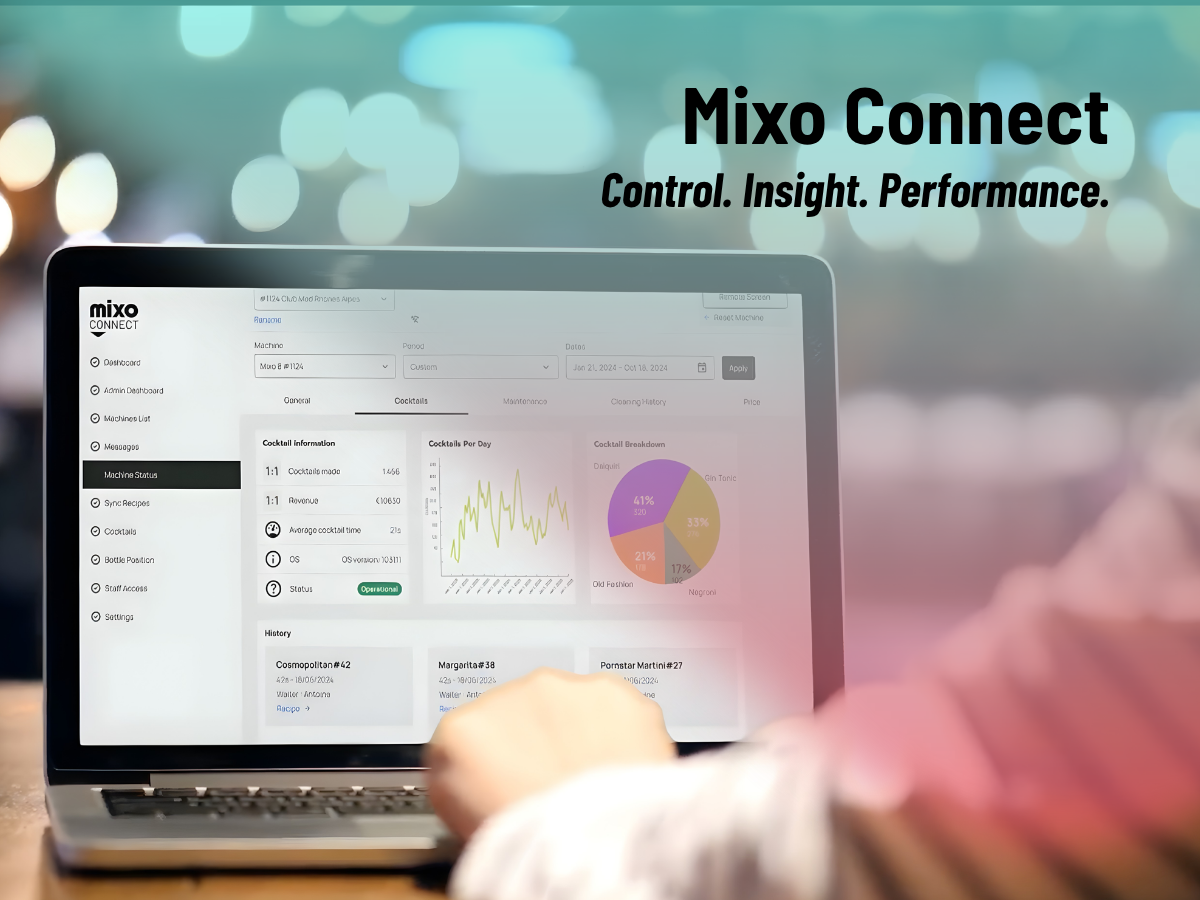
This is where Mixo Connect adds value to the team.
Mixo Connect allows operators to analyse what is happening in each Mixo and in each venue. It helps show what is being served, which recipes perform best and how demand changes across locations.
That analysis can be done in just a few minutes.
If a taste profile is delivering stronger results, the venue can keep it, reinforce it and add related recipes. If a cocktail is not working, it can be removed or replaced in a few clicks. If a category grows at certain hours, it can take a more strategic place on the menu.
This allows the offer to be adjusted in real time, without relying on long processes or decisions based only on perception.
From perception to visibility, and from visibility to action
For a brand with several venues, this is especially valuable.
What the data may reveal
Perhaps in an urban hotel, the herbal profile has more weight than expected.
Perhaps on a rooftop, the light and refreshing profile dominates during the early afternoon.
Perhaps in a resort, tropical drinks and mocktails matter more than sours.
Perhaps one specific cocktail works in one outlet, but does not justify its place in another.
What the team needs
Mixo Connect helps turn those differences into useful information.
It allows venues to move from perception to visibility, and from visibility to action.
Because a strong bartender, F&B manager or operator does not need to memorise the whole menu or guess what works.
They need clear information to decide what to keep, what to adjust and what to test next.
The best venue does not try to offer everything
The best summer venue is not the one that offers the entire menu.
It is not the one that expects its team to learn every possible recipe, because that is never truly sustainable.
The best venue is the one that understands its audience by moment and by season. The one that analyses which profiles connect, which cocktails are repeated and which flavours create a real experience.
From there, it can expand the menu with options that make sense.
It is not about filling the menu. It is about reading it better.
Because in summer, one cocktail can attract an order. But the right profile can show the venue where the whole experience should grow.