


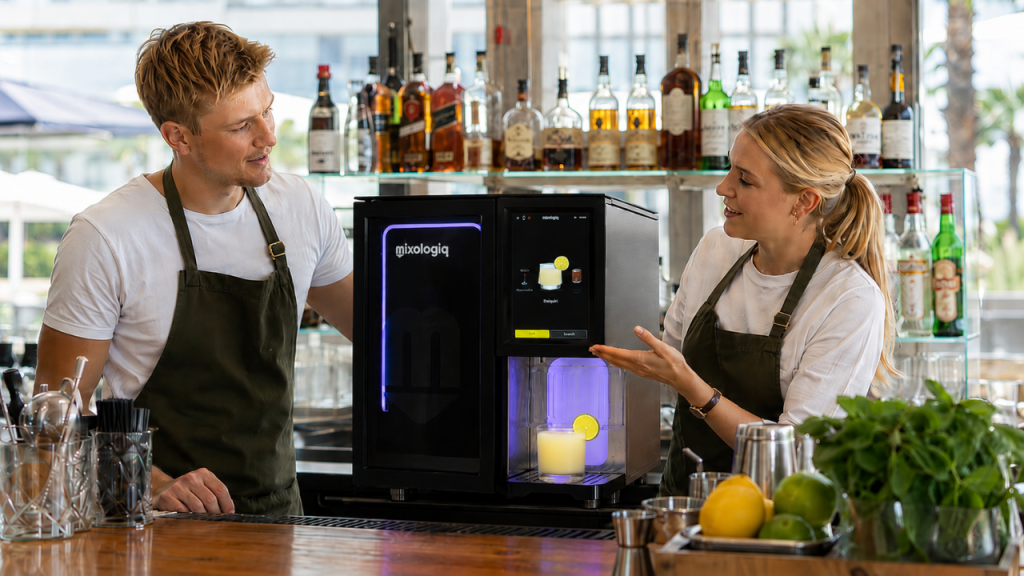
A mixology class once taught one person how to reproduce a recipe. Modern hospitality needs that knowledge to remain available to the whole venue.
The question is no longer how many recipes one person can learn. It is how individual expertise becomes collective capability.
From one person to the whole venue
For decades, the traditional mixology class followed a familiar formula: one instructor, a selection of bottles, a set of tools and a series of recipes that participants were expected to observe, repeat and memorise.
That model helped train generations of bartenders, and its technical knowledge remains essential. But it was created for a different understanding of cocktail service.
Today, hospitality operators need more than individual proficiency. They need a way to preserve professional knowledge, connect it with bar operations and make it available across shifts, teams and service moments.
Five shifts for a more useful mixology class
The new model connects professional creativity, recipe control, cocktail automation and continuous operational learning.
Why the traditional mixology class is no longer enough
Traditional mixology training concentrates knowledge inside the individual. A bartender learns the recipe, practises the technique and gradually develops the judgement required to execute the drink with confidence.
Over time, that person also learns which cocktails suit the venue, which flavour profiles guests prefer and which serves work best during different moments of service.
That expertise has considerable value. The challenge is how easily it can become fragmented.
Recipes may remain in notebooks, spreadsheets or verbal instructions. Different team members may interpret the same specification differently. A change of shift can introduce variation. When an experienced employee leaves, part of the venue’s practical knowledge may leave with them.
Professional judgement remains essential, but it should not exist only in one person’s memory.
The menu belongs to the venue, yet its execution may depend on a small number of individuals.
Modern mixology training should preserve professional judgement
The next generation of the mixology class should not be limited to showing someone how to make a cocktail. It should teach hospitality teams how to build, use and maintain a continuous service system.
In that system, a bartender’s knowledge does not disappear when a class ends, a shift changes or a new team member joins. Recipes, specifications and menu decisions remain available as part of the operation.
This does not mean replacing professional judgement with cocktail automation. It means giving that judgement a reliable structure.
Five essential shifts can turn a one-off mixology class into a continuous hospitality capability.
The mixology class should convert expertise into venue knowledge
An experienced bartender understands more than quantities. They understand balance, guest preferences, service context and the identity of the venue.
They know why a particular drink belongs on the menu, which guest may appreciate it and how it should be presented. That knowledge should continue to guide the operation.
The difference is that it no longer needs to remain only in the bartender’s memory or inside instructions that can be interpreted differently by each person.
Explain and repeat
Every new shift or team member depends on another person repeating the recipe and its sequence accurately.
Define and preserve
The venue keeps an approved reference for the recipe and makes it available within the service system.
The purpose is not to overwrite the bartender’s judgement. It is to preserve the recipe as the professional intended it.
A modern mixology class should teach systems, not only recipes
A modern training programme should help participants understand the complete path from cocktail creation to operational execution.
That path begins with professional judgement. The team decides which cocktails represent the venue, which flavour profiles suit its guests and which drinks make sense during different service periods.
Once those decisions have been made, the next step is to translate them into a structured format. Each recipe needs a clear specification. The menu should reflect the service concept. The approved recipes should remain accessible to the people who need them.
-
01
Which cocktails represent the venue?
-
02
Which flavour profiles suit its guests?
-
03
Which recipes fit the available bar workflow?
-
04
How should each cocktail be recommended and presented?
In this model, the mixology class does not end when a participant successfully prepares the drink. It also teaches how the venue protects that recipe, communicates its purpose and maintains its place within the wider cocktail programme.
New team members should inherit knowledge, not reconstruct it
When a new employee joins a hospitality team, they should not have to rebuild the entire cocktail menu from the beginning.
They still need to understand the drinks. They need to learn the flavour profiles, presentation standards and reasons each cocktail has been included.
But they should not have to depend exclusively on memorising every proportion before they can participate confidently in service.
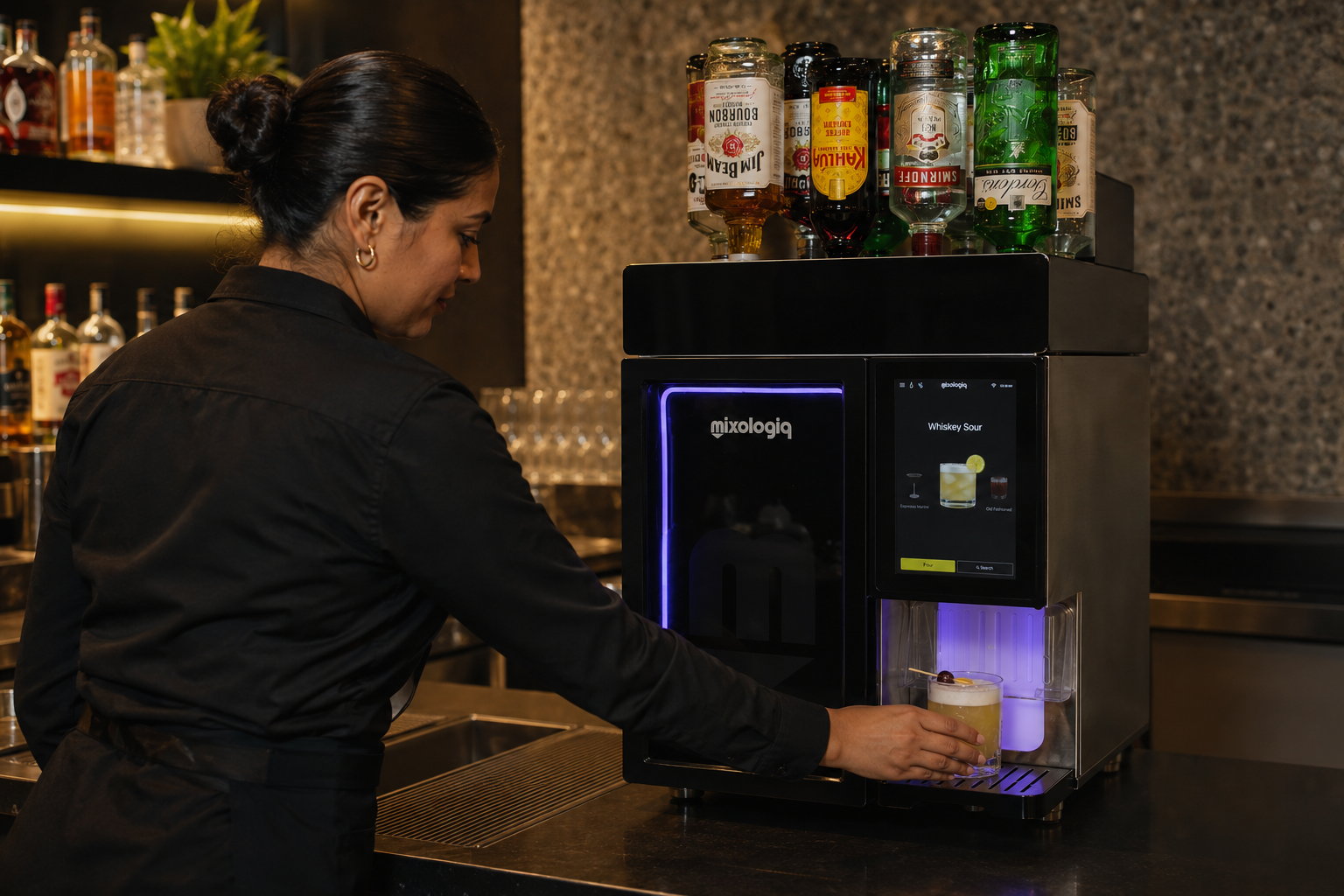
What the system preserves
Approved ingredients, recipe quantities and the defined structure behind the cocktail menu.
What the team develops
Recommendation, guest communication, presentation and the judgement required to complete the experience.
The new team member works with knowledge inherited from the bartenders, beverage managers and operators who established how each drink should be prepared.
Training can therefore spend less time repeatedly transferring measurements and more time developing menu knowledge, guest awareness and service confidence.
The mixology class can continue while the venue operates
Traditional classes usually have a defined beginning and end. A recipe is introduced, the participant practises it and the result is evaluated.
Modern mixology training can continue during real service because every operating period creates information.
Some drinks are selected more frequently than others. Certain flavour profiles may become more relevant during particular periods. Some parts of the menu may generate stronger engagement, while others may require review.
Professional observation remains important, but it can be complemented by the usage and performance information available through Mixo Connect.
The bartender contributes context. The system organises activity. The venue combines both to understand its cocktail offer more clearly.
Modern hospitality training should help the whole venue learn
The traditional mixology class taught one person how to prepare a selection of drinks.
The modern class should help an entire venue preserve, transfer and use the knowledge behind its cocktail menu.
It should allow recipes to remain accessible. It should help new team members work with standards established by experienced professionals. It should reduce the operational dependence on notes, memory and repeated verbal explanation.
Most importantly, it should recognise that cocktail expertise has value beyond the moment in which it is taught.
One person learns
Skill remains valuable, but the transfer depends on continuous explanation and individual memory.
The venue retains capability
Professional knowledge becomes part of a repeatable cocktail service structure.
How Mixologiq connects recipe control with service execution
Once a recipe has been configured, its execution no longer depends entirely on the presence of its creator.
It can become available through the cocktail system for the team to select during service. The machine supports repeatable execution, while hospitality professionals remain responsible for understanding the guest, recommending the right drink, managing presentation and completing the service moment.
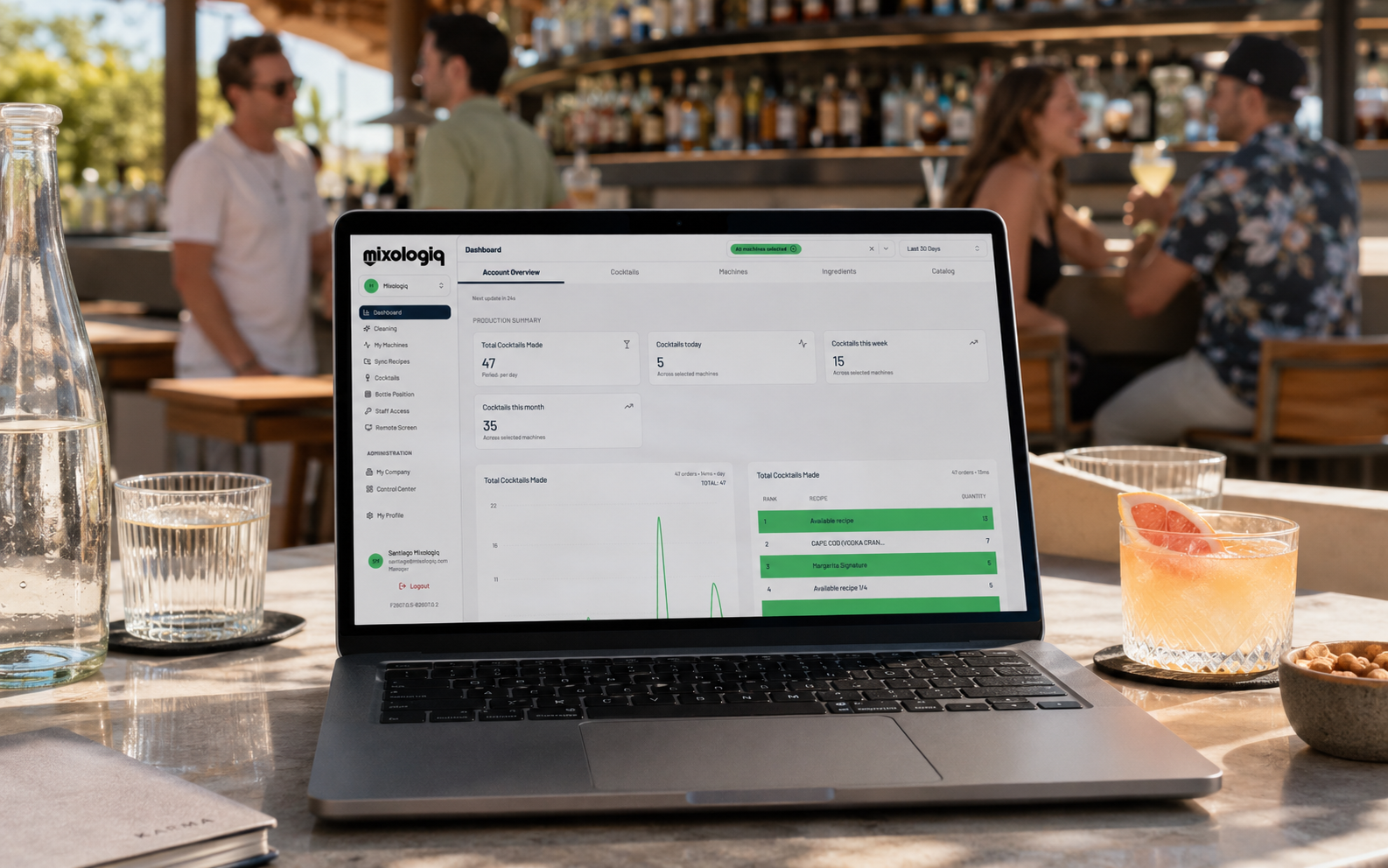
Mixologiq professional cocktail automation systems connect automated cocktail machines with Mixo Connect, the back-office platform that supports recipe and menu control, operational visibility, usage review and performance tracking.
Mixologiq is part of Asytec Group.
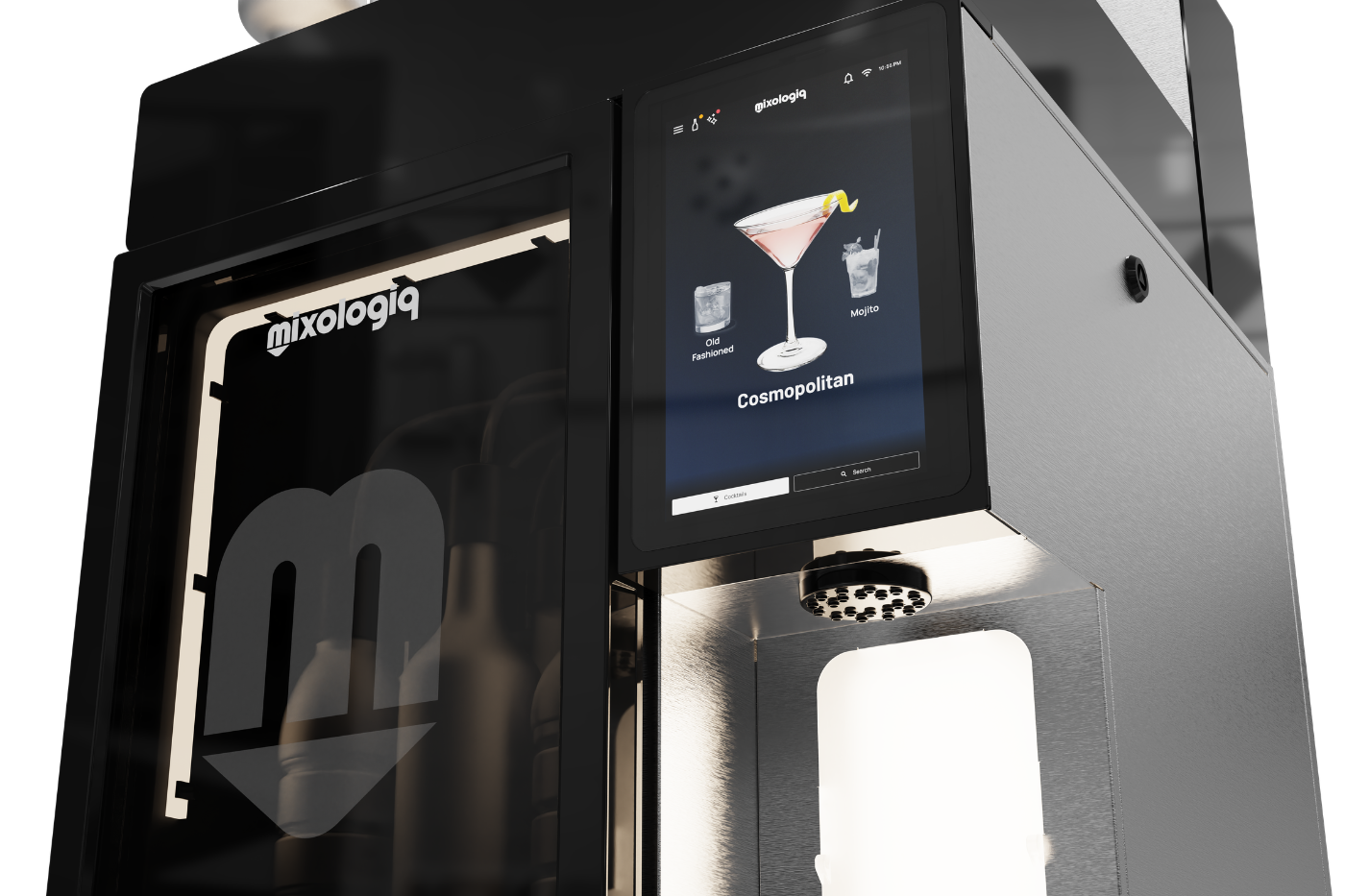
The professional defines or approves the cocktail.
The recipe and menu structure are configured.
The machine supports repeatable execution during service.
Mixo Connect helps operators review usage and performance.
The system does not decide what the bartender should create. Creativity, menu selection and the guest relationship continue to belong to the hospitality team.
Knowledge should move in both directions
In a connected cocktail operation, knowledge does not travel in only one direction.
It begins with the professional who creates, selects or approves the recipe. It remains available during service and returns to the team as structured operational information.
Define
The team selects the cocktail, its profile and its role within the venue.
Structure
The recipe and menu logic are configured within the service system.
Serve
The venue uses the approved structure during real cocktail service.
Review
Operators review machine activity, usage and recipe performance.
Interpret
The team combines data, guest feedback and professional judgement.
Modern mixology class FAQs
Practical answers for operators reviewing mixology training, cocktail automation and recipe control.
What should a modern mixology class teach?
A modern mixology class should still teach cocktail technique, flavour and professional judgement. It should also explain how recipes are structured, preserved, shared and reviewed within the venue’s wider service system.
Does cocktail automation replace bartender training?
No. Cocktail automation can support repeatable recipe execution, but bartenders and hospitality teams remain responsible for menu decisions, guest recommendations, presentation and the human experience surrounding each drink.
How does Mixo Connect support recipe control?
Mixo Connect supports recipe and menu management while helping operators review usage, performance and machine activity across the Mixologiq system.
Why should venues preserve cocktail knowledge?
Preserving cocktail knowledge helps reduce variation between shifts, supports new team members and keeps the approved menu structure available even when individual staff roles change.
Can mixology training continue during service?
Yes. During service, teams can combine guest feedback, professional observation and operational information to review how the cocktail menu is performing and where adjustments may be useful.
From teaching cocktails to building shared capability
Mixologiq does not seek to occupy the bartender’s role. It helps extend the reach of professional knowledge by connecting it with a structured cocktail service system.
The bartender defines the drink. The team creates the guest experience. Hospitality technology helps preserve the connection between them.
The original mixology class was designed to teach one person. The new class should help the whole venue learn.
Bring professional knowledge into a more structured cocktail service system.
Explore how Mixologiq supports recipe control, repeatable execution and clearer operational visibility while hospitality teams remain in control of the guest experience.